Your forehead barely moves for years, then one day those lines creep back two weeks after your appointment. The dose hasn’t changed. Your injector hasn’t changed. Your skincare hasn’t changed. What did? When patients say “Botox stopped working,” the cause almost never lives in a single variable. It is usually a shift in how the product interacts with your nerves and muscles over time, sometimes compounded by technique and lifestyle. I’ve treated thousands of faces, and the pattern is consistent: before we blame “resistance,” we rule out everything else systematically.
What “stopped working” really means
In practice, patients report three variations. First, shortened duration, where results last 6 to 8 weeks instead of 3 to 4 months. Second, incomplete effect, where a frown softens but never fully relaxes. Third, non-response, where nothing changes by day 14. These patterns point to different root causes. Shortened duration often relates to product choice, dilution, injection depth, or increased muscle activity. Incomplete effect suggests dose or map issues. Non-response raises suspicion for neutralizing antibodies or a mislabeled product, though technique still tops the list.
When we talk about “Botox,” we often mean neuromodulator injections in general. Botulinum toxin type A comes in several brands: Botox Cosmetic, Dysport, Xeomin, Jeuveau, and Daxxify. Each has a distinct complexing-protein profile, diffusion behavior, and unit conversion. A unit of one brand does not equal a unit of another. That matters when interpreting whether a botulinum toxin treatment truly failed.
A quick refresher on how botulinum toxin works
Botulinum toxin type A, used in cosmetic botox and medical botox treatment, blocks the release of acetylcholine at the neuromuscular junction. The toxin’s light chain cleaves SNAP-25 inside the nerve terminal, so the nerve cannot signal the muscle to contract. The effect isn’t immediate. The toxin must bind, internalize, and cleave the protein. Most see onset at day 3 to 5, peak at day 10 to 14, and a gradual return of motion over 3 to 4 months. Nerve endings eventually sprout new synapses around the blocked sites. That natural re-innervation is why all neuromodulator injections wear off, even with perfect technique.
The spectrum of “resistance”: from practical to immunologic
Clinicians often group failures into two buckets. The first is functional resistance, where something about the plan, dose, timing, or muscle baseline makes the results look weak or short. The second is immunologic resistance, where the body forms antibodies that neutralize the toxin, so it never reaches the SNAP-25 target. Functional issues are far more common than true antibody-mediated non-response.
Functional causes that masquerade as resistance
The top culprits I see in a cosmetic practice are:
- Underdosing relative to muscle size or strength. Strong frontalis, corrugators, or masseters can require more units than a chart suggests. Men often need higher doses, but I’ve also seen petite women with dense glabellar muscles who need above-average dosing for frown lines. Injection map mismatches. A few millimeters off can leave a motor endplate untouched. For frown lines, missing the belly of the corrugator where it originates under the brow causes persistent medial pull. For forehead lines, too few injection points or too superficial placement can produce patchy motion. Poor timing or expectations. Day 2 “no change” isn’t failure. Evaluating before day 14 (Botox Cosmetic, Xeomin, Jeuveau) or day 7 to 10 (Dysport’s quicker onset) can mislead. Daxxify may peak closer to week two and last longer. Product reconstitution and storage. Over-dilution can still work if the injector compensates with volume and accurate placement, but inconsistent reconstitution or prolonged time after mixing may blunt results. Toxins need cold-chain integrity and consistent technique. Baseline muscle behavior changes. New workout routines, bruxism flares, or increased screen squinting can overpower a familiar dose. I often see this when a patient starts lifting heavier or adds HIIT sessions. Masseter hypertrophy from jaw clenching increases dose needs for masseter botox and for jaw clenching or teeth grinding. Switching brands without adjusting units. Dysport units are not the same as Botox units, and Xeomin and Jeuveau track closer to Botox but still have nuances. If a clinic applies a one-to-one conversion across brands, outcomes vary.
All of these are solvable with reassessment, dose adjustments, refined mapping, and sometimes a brand change.
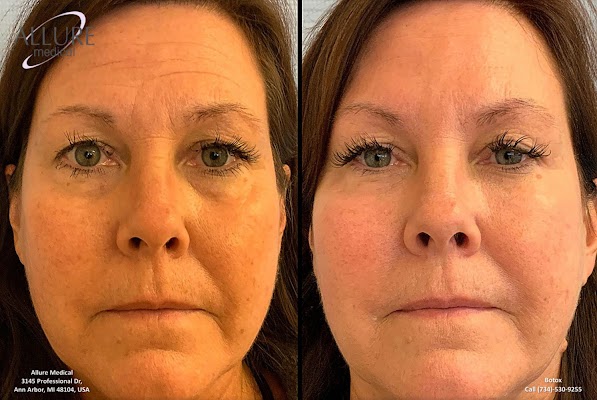
Immunologic resistance and neutralizing antibodies
True biologic resistance occurs when the immune system forms antibodies that bind the active neurotoxin and block its action. This is rare in aesthetic dosing but not theoretical. We see it more frequently in high-dose, high-frequency medical botox treatment such as for cervical dystonia or severe spasticity, where patients may receive several hundred units every 8 to 12 weeks. In cosmetic botox for wrinkles, routine doses are modest, and the interval is longer.
Two details matter for immunogenicity. First, protein load. Preparations that include complexing proteins or accessory proteins present a larger antigenic payload. Second, frequency and boosters. Short intervals, frequent touchups, and repeated high-dose sessions can increase the chance of antibody formation. Traditional Botox (onabotulinumtoxinA) contains complexing proteins. Dysport (abobotulinumtoxinA) does as well. Xeomin (incobotulinumtoxinA) is a “naked” toxin free of complexing proteins, which likely lowers its immunogenicity. Daxxify (daxibotulinumtoxinA-lanm) has a peptide excipient designed to extend duration, with low observed immunogenicity in trials to date. Published rates of neutralizing antibodies in cosmetic populations remain low, typically well under 1%, but the numbers vary by study design and testing methods.
If you truly develop neutralizing antibodies to type A toxin, you may see a progressive decline in response across all type A products. In those cases, type B toxin (rimabotulinumtoxinB, “Myobloc”) can work because it targets a different synaptic protein. Its cosmetic use is uncommon given shorter duration and more discomfort, but it remains an option in select medical contexts.
How to tell if it is antibodies or something else
In the clinic, we start with history. Did the toxin ever work for you? If yes, for how long, and what changed? Have you switched brands or injectors? Are you getting more frequent touchups? Did you recently increase training, develop TMJ symptoms, or start jaw clenching? Have you had cosmetic botox injections for the forehead lines, frown lines, or crow’s feet at intervals shorter than 3 months?
Next is a methodical test. I favor a trial with a low-immunogenicity product like Xeomin in a small, easily evaluated area such as the corrugator complex. If Xeomin works where another failed, immunologic resistance becomes less likely, and we focus on technique and dosing. If no response occurs after a controlled test with reliable reconstitution and placement, we consider antibody testing through specialized labs. The tests most relevant are mouse protection assays or newer cell-based assays, but they are not widely accessible and add cost. For most cosmetic cases, a structured brand and technique trial answers the practical question faster.
Why some areas “wear off” faster than others
Not all muscles behave the same. The frontalis is thin and active all day, so light dosing for natural movement often fades sooner than the denser glabellar complex. Crow’s feet involve the orbicularis oculi, which is robust and used in both protective blinking and smiling, so a conservative cosmetic botox plan there may last on the shorter end. The masseter holds large chewing forces; masseter botox for jaw slimming or for TMJ symptoms typically needs higher units and several rounds to reshape hypertrophied muscle. Platysmal bands in the neck are vertical fibers, often requiring a grid approach and maintenance every 3 to 4 months. If your forehead lines outlast your frown lines, it could be a mapping issue, but it could also reflect natural muscle use patterns.
The role of dilution, diffusion, and depth
Technique details decide outcomes more often than brand. For forehead lines, injections should land intramuscularly in the frontalis, not too superficial in the dermis and not too deep into bone-adjacent tissue. A watery bleb right under the skin suggests dermal placement, which may underperform. For frown lines, the corrugator originates under the medial brow and runs laterally and superiorly; placing product high without addressing the origin leaves the scowl intact. For crow’s feet, careful dosing avoids smile asymmetry while still taming the fan of lines. The dose, spacing, and depth should match the patient’s anatomy, not a template.
Diffusion can be a friend or a problem. Dysport tends to spread a bit more, which can be helpful for larger areas like the forehead, but can risk eyebrow drop if placed too low. Xeomin diffuses predictably and can be precise around delicate zones like the lips for a lip flip or near the lower eyelid for under eyes micro dosing, though treating under-eye fine lines with neuromodulator demands caution to avoid smile changes or scleral show. Micro botox or baby botox uses smaller aliquots spread across a wider area to reduce oiliness and pore appearance, sometimes called a botox facial treatment when placed very superficially. These approaches do not directly paralyze muscle, so they wear off differently and are not a fix for true resistance.
Can frequent touchups backfire?
Yes, in two ways. First, topping up every 6 to 8 weeks rarely allows the nervous system to settle into a new baseline. You end up chasing a moving target and creating the impression of short duration. Second, frequent dosing may increase immunogenicity risk, especially with higher cumulative protein loads. The safer rhythm for cosmetic areas is 12 weeks or longer between sessions. Some patients with very strong masseters or severe frown lines will edge closer to 10 weeks at times, but making that the norm invites problems.
Brand differences that matter in practice
Patients often ask about the difference between Botox and Dysport, or Botox vs Xeomin. In real faces, here is what tends to matter:
- Onset: Dysport often feels quicker by a day or two. Jeuveau and Xeomin are similar to Botox. Daxxify can feel even in onset but may take the full two weeks to settle. Diffusion: Dysport spreads a touch more. Botox and Jeuveau sit in the middle. Xeomin feels tight in its footprint. These are clinical impressions, not absolutes. Duration: Classic Botox and Xeomin give 3 to 4 months. Dysport often matches this. Daxxify can last 5 to 6 months or longer in many patients, though not all. Immunogenicity: Xeomin, with no complexing proteins, may lower antibody risk. Cosmetic doses of all are low risk.
If the concern is possible antibodies, I lean on Xeomin for a cycle. If the problem is short duration with a solid technique, I may try Daxxify. If the issue is lateral diffusion around the brow, I avoid Dysport in that zone.
When medical botox complicates the picture
Patients receiving neuromodulator injections for migraines, hyperhidrosis, or muscle spasticity often get higher total units. A migraine protocol can involve 155 to 195 units across the head and neck every 12 weeks. Hyperhidrosis treatments for underarm sweating, hands sweating, feet sweating, or scalp sweating use higher volumes and widespread injection points. If a patient combines cosmetic botox with medical dosing, the cumulative exposure rises, which can affect duration and increase the rare risk of antibody formation. Coordination between providers helps. Sometimes we stage sessions, adjust brands, or favor Xeomin for cosmetic zones while keeping medical protocols intact.
The myth of “your body gets used to it” and what is actually happening
Bodies do adapt, but not in the way the phrase implies. Muscles can hypertrophy in untreated areas and recruit around paralyzed fibers, leading to new lines or altered expressions. For example, softening the glabella without balancing the frontalis can create compensatory brow lift and horizontal lines. That is not resistance; it is biomechanics. Over time, lighter maintenance in multiple zones keeps harmony. Another adaptation is behavioral. You may raise your brows more in meetings or squint more outdoors. Those habits erode duration. A tailored plan, not bigger doses everywhere, solves it.
Special cases: lips, chin, and asymmetry
Lip flip failures often come from underdosing, misplacement, or an overly strong orbicularis oris. The margin for error is narrow. A precise 4 to 8 unit total, scattered just above the vermilion border, can roll the lip gently without speech or straw issues. Under-dosed or misplaced injections do nothing; overdone plans cause drooling or syllable slur. Chin dimpling comes from the mentalis. If only one head is treated or the dose is low, orange-peel texture persists. Facial asymmetry corrections require mapping on animation, not just at rest. If “Botox stopped working” in these small zones, the odds favor technique, not antibodies.
What to try when your results fade too soon
Here is a focused sequence I use to troubleshoot. Keep the steps spaced at safe intervals and change one variable at a time so you learn from each round.
- Extend your interval to at least 12 weeks, then switch to a low-protein product such as Xeomin for one cycle, using an adequate dose tailored to your muscle size. Re-map your injection points on animation. Lower a glabellar injection to catch the corrugator origin. Adjust forehead height to avoid compensatory recruitment. Add points rather than stacking units in a few sites. Eliminate touchups within the same cycle. If the effect is incomplete at day 14, schedule a small correction, then wait until 12 weeks for the next full session. If forehead micro-movements break through early, consider Daxxify for that zone to extend duration, particularly if you prefer fewer visits. If no response after a well-executed Xeomin trial, discuss formal antibody testing and consider a type B toxin consultation for medical indications.
How to make Botox last longer without overdoing it
Longevity starts with realistic goals. If you want a brow that still moves, you accept a slightly shorter wear time than a fully frozen look. best botox providers near my location Beyond that, small choices help. Space sessions at 12 weeks or more. Avoid unnecessary boosters. Choose a brand suited to your goals. Manage muscle contributors: a night guard for teeth grinding, physical therapy for neck tension, blue light filters for screen squinting. Skincare helps too. Retinoids, sunscreen, and topical antioxidants reduce the appearance of etched-in lines so you can dose less. For deep static lines, combine wrinkle relaxing injections with targeted filler or biostimulatory treatments where appropriate. Botox for fine lines makes dynamic creases fade, but it cannot reverse dermal volume loss alone. When the skin quality improves, the neuromodulator’s visible effect seems to last longer because the baseline looks better.
Safety across the years
Patients often ask whether botox is safe long term. In aesthetic doses, the safety profile is favorable. The protein does not accumulate in tissue. Local side effects like temporary eyelid ptosis, eyebrow asymmetry, smile changes, or mild headache can occur and usually resolve as the toxin wears off. Systemic effects are rare at cosmetic doses. The bigger safety risk sits in unregulated product, poor technique, or injection into wrong planes. Choose a clinician who understands anatomy, not just syringe counts.
If you wonder how often you should get botox, plan on every 3 to 4 months initially while you calibrate dose and map. Some eventually stretch to 5 or 6 months, especially with Daxxify, or after several cycles of masseter botox that slim a hypertrophied jaw and reduce chewing power at rest. Preventative botox or baby botox can make sense in your late twenties or early thirties if you see etched lines forming, but it should be conservative. The aim is natural motion with less repetitive folding of skin.
Separating neuromodulators from fillers
“Botox vs fillers” confuses many first-timers. Neuromodulators relax muscles. Fillers add volume or structure. If your forehead lines persist at rest, botulinum toxin treatment softens motion, but a dermal filler or collagen stimulator may be needed to lift a deep groove. For smile lines that are primarily folds from volume loss, neuromodulators do little. For bunny lines on the lateral nose, a few units of toxin solve the scrunch. For a brow lift effect, precise dosing to the lateral orbicularis and frontalis can lift the tail, but fillers or thread lifts may be better if brow position itself is low. Using the right tool prevents disappointment that looks like “Botox stopped working.”
What a careful consult should cover
A strong consult starts with animation mapping: raise brows, frown, squint, grin, purse lips, jut the jaw, swallow for neck bands. We look at your goals, like a softer frown or a subtle botox brow lift, a lip flip, less chin pebbling, or relief from facial pain. We talk about your schedule, events, and tolerance for downtime. We set expectations. Onset by week two. Review at week two to four if needed. No touchups after that in the same cycle unless there is a clear miss. If you have medical indications like migraines or hyperhidrosis, we coordinate timing.
If you are a first-timer, we start conservative. Can botox look natural? Yes, if dosing respects your expression pattern. Does botox freeze your face? It can if you ask for no movement, but most prefer partial motion. What to expect after botox: pinprick marks, maybe small bumps for an hour, fullness or a dull ache in the masseter for a day or two, rare bruising. The botox recovery timeline is short; most go back to normal immediately.
When non-response is real
I have met a handful of patients after years of appropriate dosing who lost response across multiple type A brands. They often had concurrent medical botox or frequent touchups for many years. In those cases, we confirmed non-response with a structured Xeomin trial and considered antibody testing. Some benefited from switching to type B toxin for medical symptoms such as severe sialorrhea or spasticity. For cosmetic aims, type B’s shorter duration and sting on injection limit its role. Most chose to pivot to energy devices, skincare, or filler strategies for lines and facial balancing.
If you suspect you are in this group, document your last three cycles: brand, units per area, dates, onset, and duration. Bring that to the consult. A clear record saves time and avoids repeating the same plan.
Practical takeaways and fixes that usually work
- Change one variable per cycle. Switch brand, not brand and dose and map all at once. Stretch intervals to 12 weeks or more. Resist the urge to top up early. Use the right product for the job. Xeomin for low immunogenicity trials. Daxxify for longer wear. Dysport for broad fields when diffusion helps. Botox or Jeuveau for reliable middle-ground performance. Respect anatomy. Adjust injection depth and point placement to the muscle’s origin and function. Support the plan. Manage bruxism, reduce squinting, maintain skincare, and align filler or skin treatments where static lines persist.
A brief word on edge cases
Under-eye placement, micro botox, and botox under eyes deserve caution. Even tiny doses can change a smile or reveal more sclera. Chin dimpling treatments can create heaviness if the mentalis is overtreated. Bunny lines often need fewer units than expected. A botox lip flip can help a gummy smile but requires precision to avoid lip incompetence. Masseter botox can change face shape subtly over months, slimming the lower face while improving jaw clenching and teeth grinding. Each of these has a narrow lane between “not enough” and “too much.” Failures here are nearly always technique related.
The bottom line for the frustrated patient
Botox does not typically “stop working” out of the blue. Most cases respond to better mapping, adjusted dosing, brand selection, and wiser intervals. True neutralizing antibodies exist, but they are rare in cosmetic use. When suspected, a low-protein product trial like Xeomin clarifies the picture, and formal testing or type B toxin enters the discussion only if multiple well-executed attempts fail.
If your last session felt weak or short, ask your injector to review the plan muscle by muscle. Bring photos at rest and on animation from weeks two and six. Discuss your habits, training, and any new clenching or headaches. Consider a brand change for a cycle. Give it a full three months before you judge. With a few thoughtful adjustments, most patients return to smooth, natural motion and a predictable rhythm that lasts.
And if you are just starting, keep it simple. Choose an experienced clinician, start with clear goals such as botox for forehead lines, botox for frown lines, or botox for crow’s feet, and build from there. The right plan should fit your face, not the other way around.